

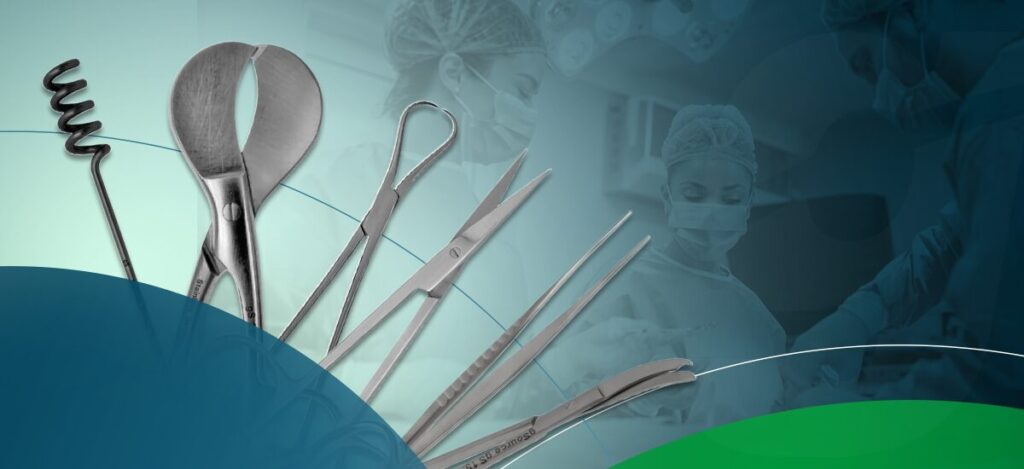
When evaluating surgical instrument costs, the purchase price represents the beginning of your financial commitment. Savvy purchasing managers understand that the lowest up-front cost rarely translates to the best long-term value. The real question isn’t “What does this instrument cost?” but “What will it cost over its entire lifespan?”
Total Cost of Ownership (TCO) provides a comprehensive framework for understanding true financial impact. By accounting for maintenance, repairs, sterilization and replacement, TCO reveals which instruments deliver genuine value and which burden budgets with hidden expenses.
Understanding TCO requires breaking down complete life cycle costs into component parts:
Research demonstrates that the total lifetime costs of medical devices often significantly exceed their initial acquisition price, making the purchase price alone an inadequate metric for procurement decisions. A premium instrument at $500, compared to a budget alternative at $200, often delivers better value when costs are calculated over operational life.
Premium instruments feature superior materials, such as high-quality stainless steel, which directly influence maintenance frequency, repair costs and operational longevity.
Maintaining surgical instruments is a significant ongoing expense that varies depending on the initial quality. Facilities invest considerable resources per instrument on sharpening, realignment and servicing. Lower-quality surgical instruments will incur hidden costs and require more frequent maintenance.
Budget scissors require sharpening more frequently, while premium instruments maintain their edge through numerous procedures. This difference compounds over time. Proper care and handling of surgical instruments impacts upkeep frequency, as facilities with robust handling protocols, such as immediate rinsing, proper sorting, and systematic inspection, can experience fewer maintenance events.
Surgical instrument reprocessing represents a high hidden cost in healthcare facilities. A 2026 study analyzing over 112 million instruments across 251 U.S. facilities found that reprocessing costs range from $1.3 to $11.8 billion annually, with each instrument undergoing an average of 35 reprocessing cycles per year. These costs remain constant regardless of instrument quality, which is why premium instruments that require fewer replacements often deliver better TCO.
The life expectancy of surgical instruments varies based on quality, usage patterns and care protocols. With proper maintenance, premium instruments may last much longer than budget instruments. A facility purchasing budget instruments at $200 every 250 procedures will spend more over a decade than one investing $500 in premium instruments that last 1,000 procedures.
Smart purchasing managers can significantly reduce surgical instrument repairs and overall TCO through strategic decisions.
Material quality fundamentally determines instrument longevity and maintenance requirements. High-quality stainless steel offers superior corrosion resistance, edge retention and durability.
Premium instruments resist degradation after hundreds of sterilization cycles. A $500 premium instrument that lasts 1,000 procedures with minimal maintenance delivers significantly better value than a $200 alternative that requires frequent sharpening and replacement after 250 procedures.
The most cost-effective way to reduce surgical instrument repairs is by implementing consistent care and handling protocols, such as:
Inspecting surgical instruments at multiple points catches minor issues before they become costly repairs. A misaligned jaw caught during inspection might require minimal servicing. Left unaddressed, it could render an expensive instrument unusable.
Partner with a manufacturer offering lifetime guarantees to eliminate the cost of replacing defective instruments while providing repair services that keep instruments performing optimally.
Look for manufacturers with established reputations, extensive inventories and transparent repair pricing.
When comparing surgical instruments, evaluate these critical TCO factors:
Request documented lifespan data. Premium instruments should demonstrate life cycles of 500 to 1,000 procedures with proper maintenance.
Complex instruments that require specialized maintenance incur higher life cycle costs. Evaluate maintenance frequency, servicing costs and in-house capabilities.
Repair pricing and turnaround times directly impact TCO. Flat-rate repair services and quick turnarounds minimize costs and disruptions.
At gSource, we understand purchasing managers are accountable for long-term value. Our approach delivers instruments that minimize total life cycle costs through superior quality and comprehensive support.
When you invest in gSource instruments, you’re investing in long-term performance backed by comprehensive guarantees. As an accredited manufacturer, we provide premium instruments that deliver extended life cycles.
With over 95,000 instruments in our catalog, we ensure you receive products engineered for durability. As an ISO 13485-certified, FDA-registered manufacturer and an ARCH Medical Solutions company, we maintain quality standards that directly impact your TCO.
gSource provides the expertise, inventory and manufacturing capabilities to help you optimize TCO. Reduce your long-term surgical instrument costs by reaching out to us for a consultative conversation about how our premium instruments and lifetime guarantees can lower your facility’s TCO.
The shift from price-focused to value-focused purchasing requires looking beyond initial costs. TCO provides a framework for informed decisions, revealing which instruments deliver genuine value.
By investing in premium materials and implementing proper care protocols, purchasing managers can reduce total life cycle costs.
At gSource, we’re committed to helping purchasing managers make smarter decisions, and our catalog ensures you achieve the lowest possible TCO without compromising quality.
Contact our team today to discuss your needs and optimize your surgical instrument investments.
Here are some frequently asked questions about the total cost of ownership:
Calculate TCO by adding all costs across the instrument’s lifespan:
A $500 instrument used 500 times, with $5 in sterilization costs and $100 in annual maintenance over 5 years, has a TCO of $3,500, or $7 per procedure.
The decision depends on the extent of damage, the instrument’s remaining lifespan and the repair cost relative to the replacement cost. Minor issues like dull edges or loose joints are typically worth repairing, especially for premium instruments with significant life remaining.
Implement a tracking system that records key data points for each instrument. These include purchase date, acquisition cost, maintenance history, sterilization cycles, repair expenses and replacement dates. Many facilities use inventory management software that integrates with their sterile processing department to automatically log sterilization cycles and flag instruments approaching end-of-life thresholds.