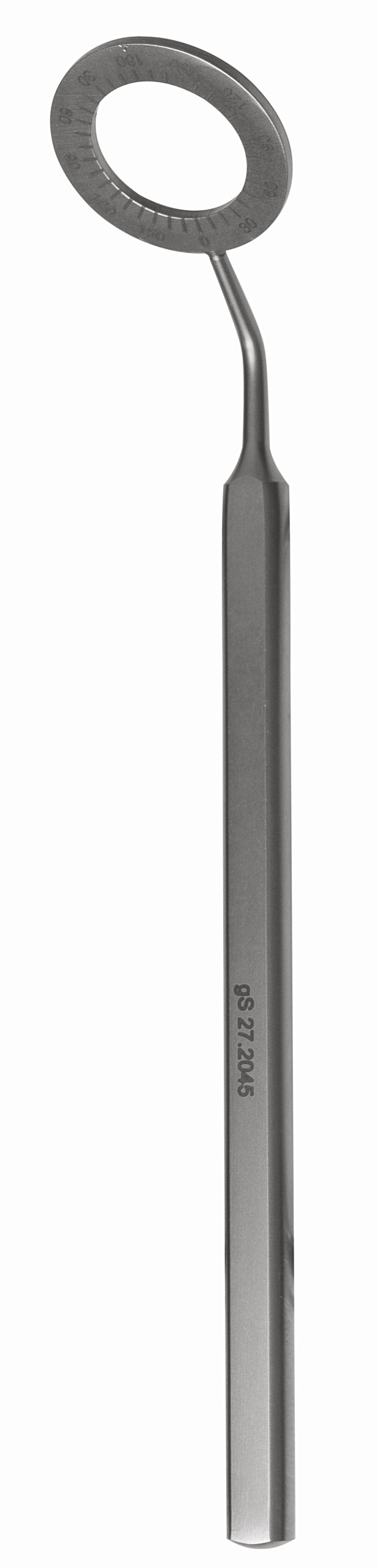
Key Specifications of the Mendez Degree Gauge
The Mendez instruments we manufacture feature:
- Angled design: The 4 1/2-inch angled configuration facilitates positioning over the corneal surface while maintaining visibility of the surgical field. This angle degree gauge can help minimize obstruction during measurement.
- Dual-diameter measurements: The instrument features a 12.4 mm inside diameter and a 19.4 mm outside diameter, intended to provide reference points for different corneal zones and support alignment of measurements with specific anatomical landmarks.
- 180-degree marking scale: Graduated markings from 0-180 degrees enable identification of the steep meridian axis. The scale can support planning of limbal relaxing incisions and other astigmatism-correction techniques.
- German stainless steel construction: This material offers corrosion resistance and durability under repeated sterilization cycles. Stainless steel can maintain dimensional stability, which may be important for measurement accuracy over the instrument’s service life.
These specifications reflect the design priorities common to ophthalmic measurement instruments. Our engineering precision supports consistent and reliable performance in surgery.
Applications in Ophthalmic Surgery
The degree gauge serves as a measurement and marking tool in procedures where corneal astigmatism management is part of the surgical plan. During cataract surgery with toric intraocular lens implantation, surgeons use the instrument to identify and mark the steep meridian axis on the cornea.
In limbal relaxing incision procedures, the gauge can assist with planning incision placement along the steep meridian. The surgeon positions the instrument on the corneal surface, uses the graduated scale to identify the axis and marks reference points intended to help guide incision location and length.
The instrument is also used in corneal transplant procedures where astigmatism correction is anticipated. Surgeons can measure and document corneal axis orientation to plan suture placement or secondary procedures aimed at reducing postoperative astigmatism.
Considerations for Instrument Care
Keep the following tips in mind:
- Rinse the instrument promptly after use to prevent residue buildup that could affect surface clarity.
- Check the marking scale regularly for wear that could compromise readability during procedures.
- Examine the instrument surface for scratches that might interfere with positioning on the corneal surface.
- Store the gauge in a tray to prevent damage between sterilization and use.
- Use care when transporting the instrument to avoid dropping or contact with hard surfaces that could affect calibration.
- Verify that autoclave cycles remain within manufacturer-recommended temperature ranges to avoid stress that could alter dimensions over time.
- Maintain service records, noting sterilization dates and any observed wear patterns to support proactive replacement planning before measurement accuracy declines.
Following these care practices can help facilities maximize instrument longevity while maintaining the performance standards expected in ophthalmic procedures.
Source Your Mendez Instruments
View the specifications and add Mendez instruments to your cart. We can accommodate private labeling requests and custom orders for facilities with specific procurement requirements. Submit any questions through our online form, or order your instruments today.