

Surgeons use high-quality tools to provide safe, effective results for their patients. An instrument’s grade directly reflects its durability and precision, indicating how reliably it will perform under pressure.
Scalpels might look identical at a glance, but their composition, heat treatment and finishing determine how well they hold up under the rigors of regular use. A slight defect can increase infection risk or interfere with the surgeon’s detail-oriented work. High-grade tools minimize failures and withstand repeated sterilization without warping.
Instrument quality impacts patient outcomes and directly influences operational costs. Hospitals invest in reusable instruments to minimize waste and risk, but tools that fail early add unexpected expenses. Since replacements and downtime are pricey, higher-quality instruments will reduce long-term ownership costs.
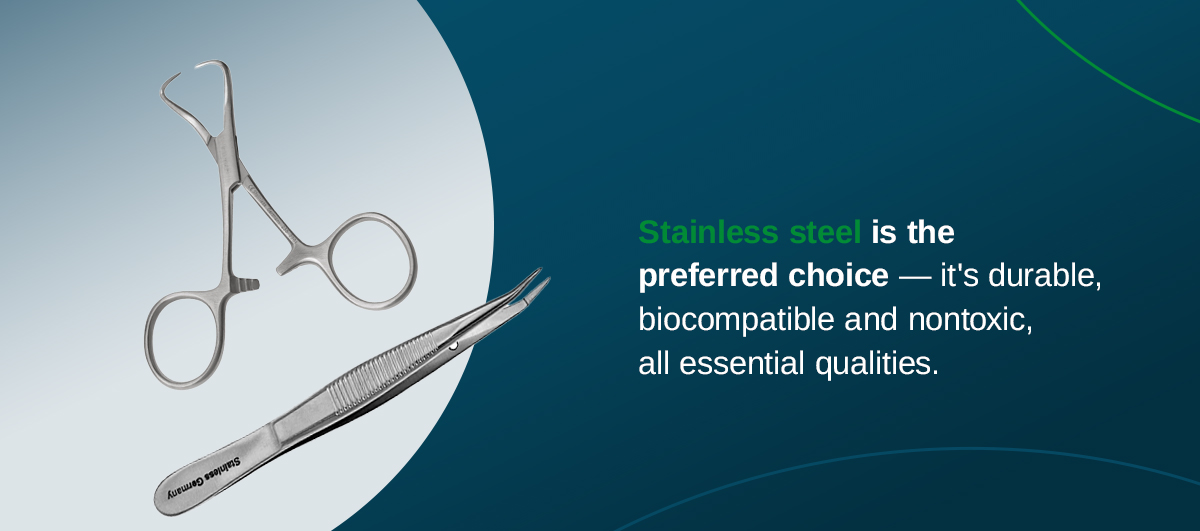
Surgical instruments need high-quality materials to perform effectively. Stainless steel is the preferred choice — it’s durable, biocompatible and nontoxic, all essential qualities. The 400- and 300-series are the most common.
Surgical instrument grades help buyers match tools to their intended use. Premium, mid-grade and economy options offer different levels of durability and precision. Hospitals and OEMs select the appropriate grade based on budget and application, aiming for the best performance at the most cost-effective price point.
Premium, or OR-grade, instruments are the highest quality, forged from 400-series German stainless steel. This corrosion-resistant material is durable and retains a sharp edge. Manufacturers source premium components from accredited manufacturers who meet Deutsches Institut für Normung guidelines — the industry standard for premium tools.
OR-grade instruments undergo multiple inspections and receive a matte or satin finish to reduce lighting glare. Designed to resist pitting and wear, premium instruments deliver reliable performance for years when properly maintained. These tools will produce the best results if your facility frequently performs complex procedures.
Mid-grade instruments combine affordability and durability. While they don’t meet the highest DIN standards, they’re stainless steel and suitable for frequent use.
While premium options must meet strict uniformity standards, mid-grade materials have more room for minor flaws. They can have slight variations in pattern and tip alignment, as long as they meet performance standards. They are subject to fewer in-process inspections, which reduces the cost. However, ISO 13485-certified distributors have a verified quality management system.
Additionally, mid-grade tools are corrosion-resistant and reusable. They’re ideal for teaching hospitals and general clinical environments, offering consistent performance at a lower cost compared to premium units.
Economy, or floor-grade, instruments are the most affordable option. Forged from lower-grade stainless steel, they could corrode with regular use. Economy instruments have a shorter lifespan and reduced reliability, increasing replacement costs compared to higher-grade options.
Floor-grade instruments often rust and deform after repeated sterilization. Unlike premium options, they lack anti-glare finishes and tend to lack the hardness needed for precise cutting. Choose economy instruments for short-term or low-risk applications like training programs and cadaver labs.
Instrument grade is the foundation of quality assurance when purchasing equipment. It determines how consistently tools perform under pressure. When grades drop, so do predictability and safety.
When surgeons can trust their tools to perform, they work more confidently and preserve their patients’ well-being. Premium and mid-grade tools undergo thorough testing for tolerances and repeat performance. Inspectors check every aspect to ensure stability through repeated sterilization and use.
Economy-grade instruments lack the same consistency. Fewer inspections and controls can lead to loose components and misalignment. These problems will slow down surgeries and even compromise sterility. Escalating quality issues increase risks and lead to worse results.
Quality assurance starts with trusted materials. Stainless steel’s type and purity determine how an instrument handles stress and wear. High-grade alloys that comply with DIN and ISO 13485 standards have the strength to withstand repeated sterilization. Combine high grades with trusted industry sources to further protect quality. Working with distributors that document sourcing steps assures you that the instruments will perform as intended.
Repeated sterilization can corrode stainless steel. A process called passivation cleans the surface and creates a thin chromium-oxide film on stainless steel instruments. This layer prevents rust, increasing the equipment’s performance life. Premium and mid-grade tools undergo verified passivation to resist corrosion. Lower-grade or plated instruments might skip passivation. The result is sterility-compromising rust and increased safety risks.
Choosing the best surgical instrument means breaking down budgets and applications. Quality tools let surgeons operate effectively while controlling costs. Every health care environment has unique needs. For example, a busy trauma center demands lasting instruments, while a training facility needs lots of tools. Here’s how each grade fits with your application.

Your operation needs effective, reliable surgical instruments to protect patients. Surgical grade is where you start your search, but how do you verify their quality? Partnering with the right supplier determines how instruments perform in the field. gSource is an ISO 13485-certified, FDA-registered distributor trusted by hospitals and OEMs worldwide. We source every instrument from accredited global manufacturers, verifying all our offerings for traceability and compliance with industry standards.
As part of ARCH Medical Solutions, gSource offers access to 20 U.S.-based facilities for prototyping, custom sourcing and large-volume production. We combine global reach with American engineering expertise. Choose us and gain a partner dedicated to quality assurance and rapid fulfillment. Place your order with us online today!