

Every operating room depends on well‑made, reliable instruments to support efficient, predictable performance. It all starts by selecting high-quality tools that enable surgical precision.
We’ve created this essential surgical instruments checklist to outline the core instruments every OR should have, making it easier to equip your team with dependable, high‑value solutions for any procedure.
Each surgical instrument in your toolkit fulfills a specific purpose during a procedure, ensuring reliable operating where it matters most. All reusable surgical instruments consist of safe, durable surgical-grade stainless steel.
These tools are pivotal in your goal of making your OR as functional as possible, which is why you need to invest in high-quality and high-value general surgery instruments.
Scalpels are a staple in any OR surgical instruments kit. They’re thin, small knives used to create clean incisions that result in minimal tissue trauma. Top-quality German surgical stainless steel provides durability and precision. Also, various sizes accommodate different-sized blades, depending on your needs.
Your scalpel should feature a comfortable handle and a secure grip for smooth handling, ensuring safety for you and your patient. The following scalpel handles are ideal for most purposes.
It’s also worth investing in a blade remover to switch blades safely when the time comes.
Surgical scissors come in a range of designs, each shaped for a specific task — from cutting tissue and skin to trimming sutures and bandages. Made from high‑quality German surgical stainless steel, they offer durable, reusable performance in your OR.
Keep these scissor types in your inventory to prepare your team for any surgical scenario.
Maintaining your surgical scissors is essential in prolonging their lifespan. Complete post-use rinsing, thorough sterilization, regular hinge lubrication, damage inspections and precision sharpening to keep the instruments in optimal condition.
Forceps handle, grasp or extract tissue or materials during surgery. These tweezer-like instruments also come in different types for various uses, each serving an essential purpose during a procedure. They feature fine tips and controlled jaw pressure to avoid damage to tissue.
Include these forceps types in your OR.
Clamps compress and control tubing and vessels and hold tissue in place to allow visibility and unobstructed operating sites. They’re different from forceps due to their locking ratchet mechanism for hands-free clamping. These tools can either be curved or straight, depending on the application.
Like forceps, different clamps serve specific purposes.
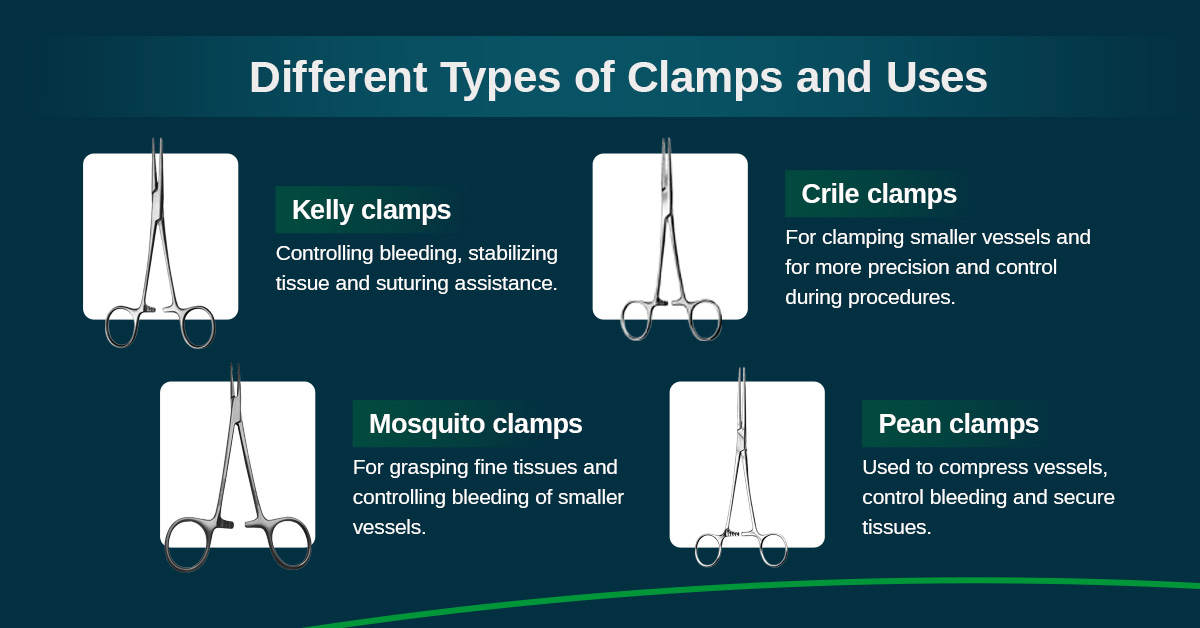
Retractors gently separate the edges of a surgical incision and hold underlying tissues while you operate. This instrument provides you with a better view and more space to perform your procedure.
These instruments come in two formats.
Once you complete a procedure, it’s time to close the incision with sutures. You can use various needle holders to securely grasp and drive suturing needles through tissue during wound closure. They reduce slippage, especially as you access difficult-to-reach areas.
At gSource, we understand the need for budget-conscious solutions. And with our gSV line, we offer affordable, reliable general surgery instruments crafted from surgical-grade stainless steel to streamline your processes without sacrificing patient safety or comfort.
There are many reasons to consider our gSV range for your boutique medical center or a large hospital.

gSource is your one-stop shop for quality instrumentation crafted from surgical stainless steel, ensuring high-quality instrumentation for you OR.
Our gSV range offers a broad selection of affordable, reliable and readily available general surgery instruments. If you can’t find what you’re looking for, we also provide private labeling and customization.
Contact us for a quote or to discuss your instrument needs.