A Supplier’s Guide to Depth Gauges in Orthopedic Surgery
Selecting the appropriate depth gauge ortho instrument requires consideration of both the measurement range and accessory features needed for specific fracture fixation techniques. The information that follows helps you match gauge specifications to procedural requirements at your facility.
Matching the Instrument to Your Needs
Depth gauges are available in multiple length configurations and feature options designed for different orthopedic applications.
When building your instrument inventory, consider these common specifications:
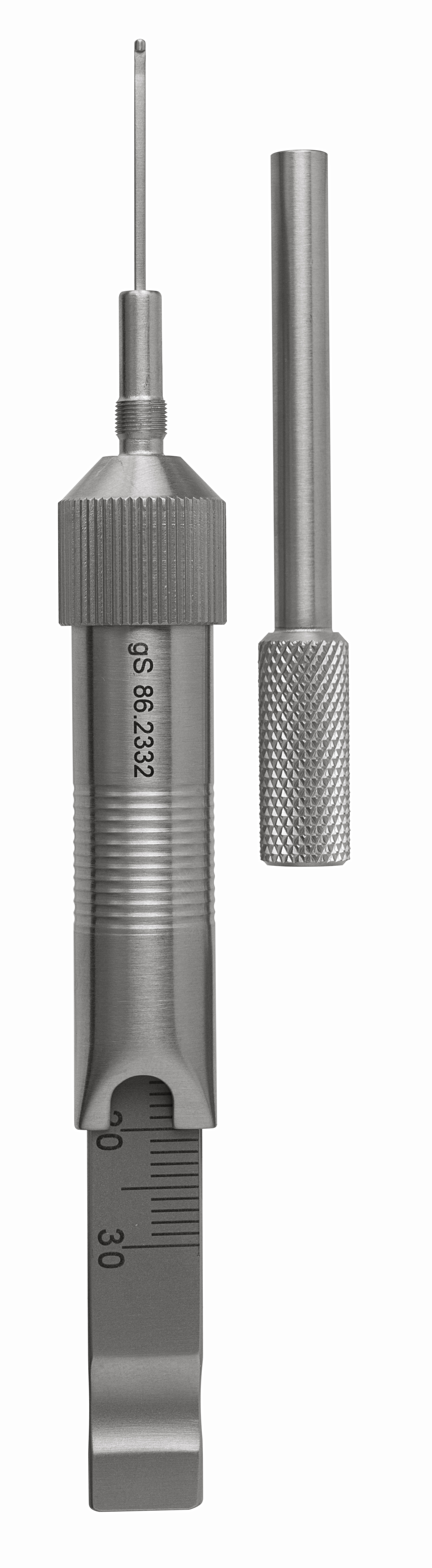
- 30mm gauges: These compact models support precise measurement in shallow anatomical sites for procedures involving small bones or limited-depth drilling.
- 100mm gauges: These midrange length gauges accommodate standard fracture fixation procedures across multiple anatomical locations, balancing reach with control for routine orthopedic work.
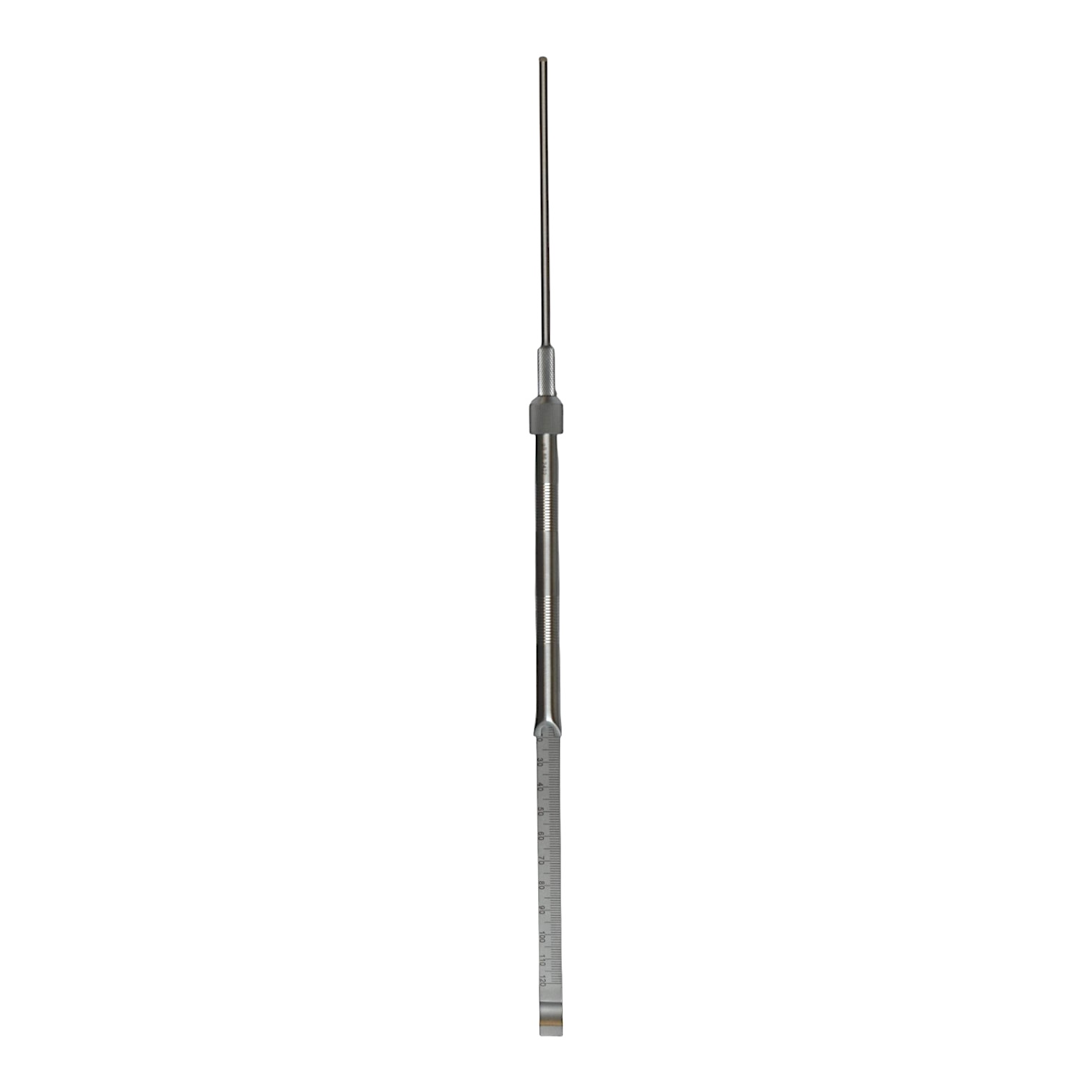
- 110mm and 120mm gauges: These extended-length configurations provide additional reach for deeper bone cavities or when working in larger bones or complex fracture patterns.
- 150mm gauges: These maximum-length options support measurement in the deepest anatomical sites and enable access during procedures involving long bones or posterior approaches.
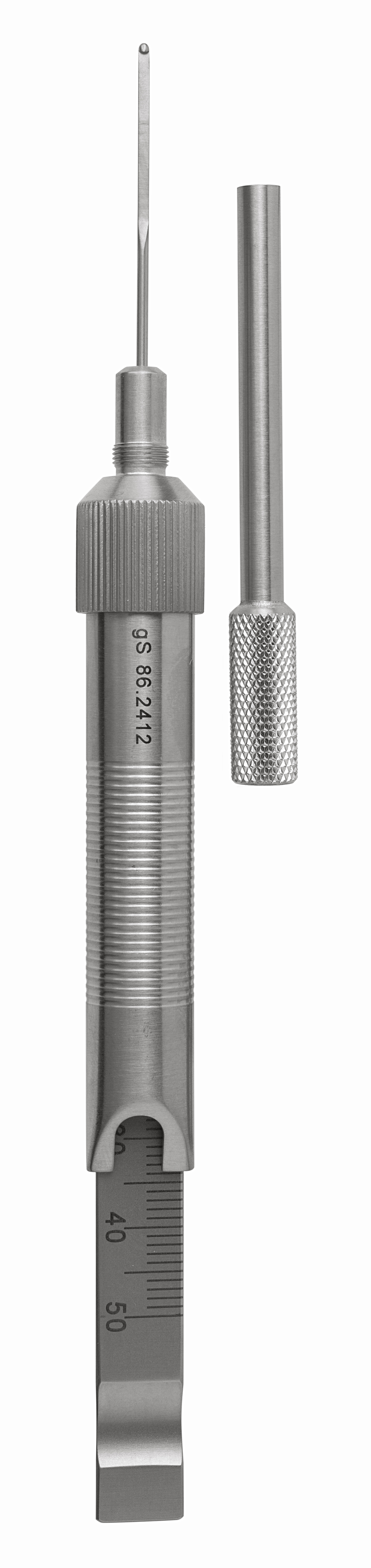
Some surgical depth gauges are available with screw-on or snap-on protective caps that shield the delicate working end during storage and transport. Select models also include probe sleeves that enhance measurement accuracy and protect surrounding tissue during insertion. All configurations disassemble for thorough cleaning and sterilization.
Intended Uses in Common Procedures
Depth gauge surgical instruments support precise screw placement across orthopedic specialties:
- Trauma surgeons commonly use these gauges during internal fixation of long bone fractures requiring plate and screw constructs.
- Orthopedic hand specialists use these instruments during fracture repair in metacarpals, phalanges and other small bones of the hand and wrist.
- Spine surgeons often use these tools during pedicle screw placement and spinal fixation procedures, where accurate depth measurement helps prevent neural or vascular complications.
- Sports medicine surgeons use these gauges in ACL reconstruction, rotator cuff repair and other procedures that require precise anchor or screw placement.
Matching gauge length to anatomical requirements supports optimal outcomes across orthopedic applications.
Maintaining the Quality of Your gSource Instruments
Proper care extends the functional lifespan of precision orthopedic instruments. gSource depth gauges, manufactured from high-quality surgical stainless steel, benefit from appropriate maintenance:
- Disassemble depth gauges completely after each use for thorough cleaning.
- Follow manufacturer sterilization protocols to preserve measurement accuracy and prevent corrosion.
- Retract the delicate working end when the instrument is not in use to protect against damage during handling or storage.
- Conduct routine inspections for tip wear, calibration drift or component loosening before each procedure.
- Store instruments in a clean, dry environment that prevents exposure to corrosive substances or temperature extremes.
When maintained according to these guidelines, quality depth gauge instruments deliver reliable performance throughout their service life.
Equip Your Orthopedic Service Line With Precision Depth Gauges
gSource streamlines orthopedic instrument procurement with a catalog of over 95,000 specialized tools in stock and ready to ship. Browse our depth gauge inventory to identify the measurement ranges and feature combinations your facility requires. Our team coordinates bulk orders and provides complete product specifications.
Contact a gSource representative with questions or order precision depth gauges now.